
Field notes ·
Tracking things that don't add up
4 min read
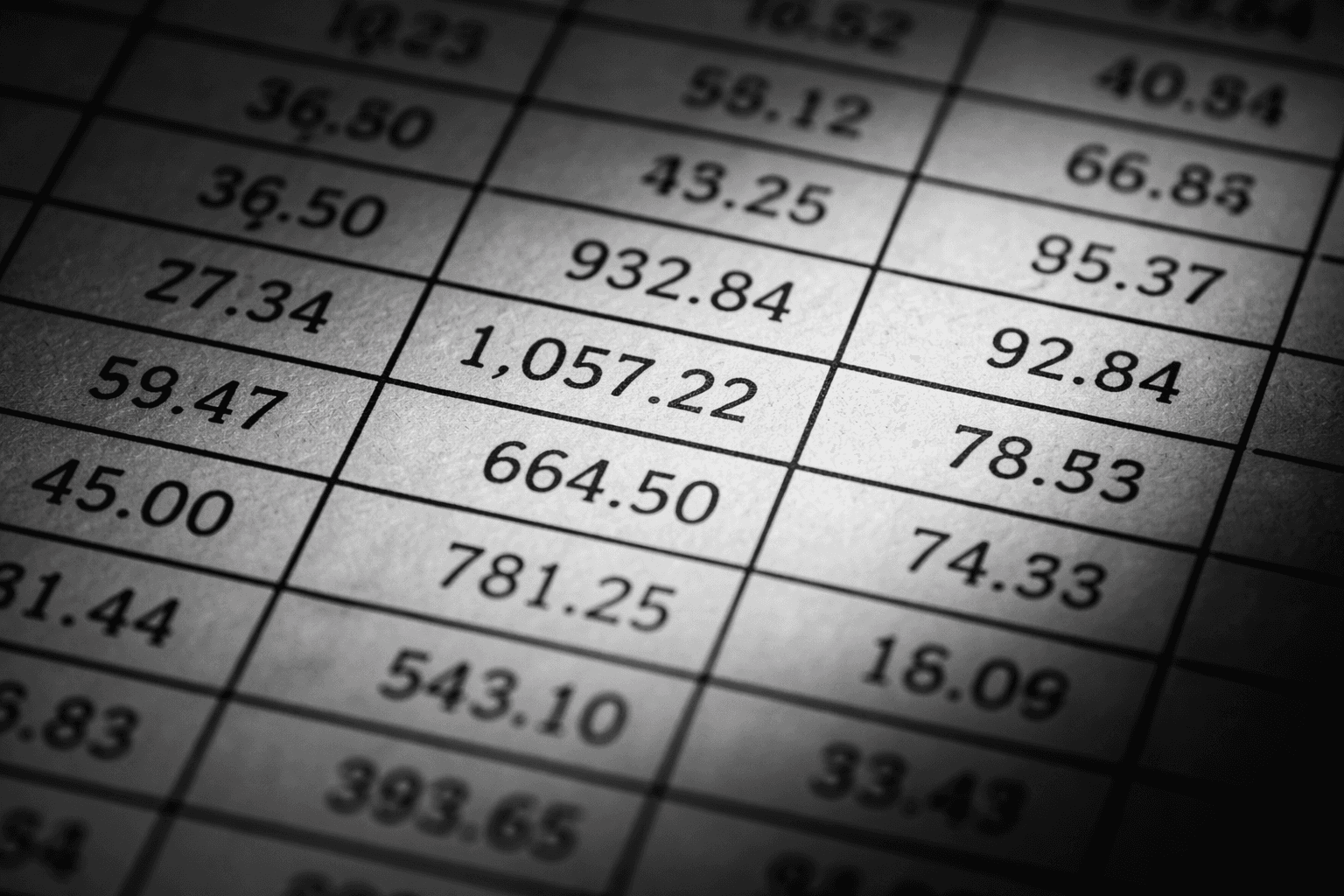
Most people who start tracking their goals do one of two things. They track too much, adding measures until the dashboard looks impressive and the habit slowly dies. Or they track one or two things for a while, then quietly stop, with no clear memory of why they started.
Neither problem is really about discipline. It's about a missing connection between the number being tracked and the reason it was supposed to matter.
I've tracked a lot over the years. Weight, body fat, hours spent on work that actually moves things forward, money bleeding out through small recurring decisions. Spreadsheets, mostly. I like spreadsheets. They're flexible in a way most tools aren't, and that flexibility is genuinely useful when you're trying to figure out what to measure in the first place.
But flexibility has a cost. A spreadsheet doesn't ask you why you're tracking something. It doesn't connect a measure to an objective, or prompt you to notice when a measure has quietly stopped being useful. The data accumulates. You review it less. Eventually you're maintaining a record of things you no longer care about, for reasons you've forgotten.
I tried other tools too. Some are good at passive data collection, pulling in numbers from connected apps without much effort. That solves the friction problem, but it introduces a different one. When data arrives automatically, it's easy to assume that capturing it is the same as understanding it. You end up with a detailed picture of your behaviour and no strong view about whether any of it is pointing in the right direction.
The gap between measurement and intent
The problem isn't measuring. Measuring is useful. The problem is measuring without a clear, deliberate chain that connects the number to something you're actually trying to achieve.
That chain looks roughly like this: here is what I want to achieve, here is what I believe will move me towards it, here is how I'll measure whether that's happening, and here is how I'll honestly review whether the whole thing is working. Each link depends on the one before it. Skip any of them and the measurement floats free of its purpose.
Most tracking tools handle the middle part well. They capture data and display it. Some do the last part passably, with charts and summaries. What they rarely do is help you hold the first link clearly, or connect the final review back to the original intent.
That gap matters for a specific reason. Without it, you can find yourself tracking measures that were once connected to a goal, long after the goal has shifted. The measure continues because you set it up and never actively stopped it. The goal changed because life changed, and you let it drift rather than making a decision. You end up optimising for a previous version of your priorities, and the only thing the data tells you is that you're consistent. Consistent at the wrong thing.
Deliberate change versus drift
Goals should change. New information comes in, circumstances shift, you understand something better than you did six months ago. None of that is a problem. The problem is when goals change by drift rather than by decision.
Drift is passive. You stop pushing towards a goal, it gets quietly replaced by something more comfortable, and the tracking record slowly diverges from what you actually care about. A decision is different. You look at what you were trying to achieve, you look at what you know now, and you make a call. Maybe you raise the target. Maybe you drop the measure entirely because you've realised it was a proxy for something it wasn't actually measuring. Either way, it's an active choice, not an erosion.
This is what review is for. Not to feel good about a streak or bad about a missed week, but to close the loop between the original intent and the current reality. To ask whether the number still means what you thought it meant when you started tracking it.
What rcordr is trying to do
I built rcordr because I wanted a tool that held that full chain in one place. Objective, measure, review, and the thinking that connects them. Something that sits in your pocket and is easier to use than a spreadsheet, but doesn't sacrifice the clarity a spreadsheet forces you to bring when you set it up yourself.
It's early. The app exists, and it works, but there's a lot still to build. What I'm clear on is the problem it's trying to solve: not the absence of data, but the absence of the reasoning that makes data mean something.